Bespoke Packaging Manchester: Creating Smart Businesses
Packaging is often treated as a simple necessity, but for many businesses, the right packaging can influence far more than the appearance of a parcel. It can protect valuable products, make packing operations easier, reduce unnecessary material usage, and leave customers with a stronger impression of the brand.
This is where Bespoke packaging Manchester solutions can make a difference. Instead of relying entirely on standard-sized boxes and generic protective materials, businesses can develop packaging around the specific requirements of their products.
For companies operating in Manchester and supplying customers across the UK, having access to flexible packaging solutions can be particularly useful. Different products require different levels of protection, and a carefully considered packaging design can provide a better balance between safety, cost, presentation, and practicality.
What Makes Bespoke Packaging Different?
Standard packaging is designed to accommodate a broad range of products. While this makes it convenient, it does not always provide the ideal fit.
A product that is considerably smaller than its box may move during transportation, increasing the possibility of impact damage. Adding excessive loose-fill material can solve part of the problem, but it may also increase packing time and material consumption.
Bespoke packaging takes another approach. The packaging can be developed around the product’s dimensions, shape, weight, and vulnerabilities.
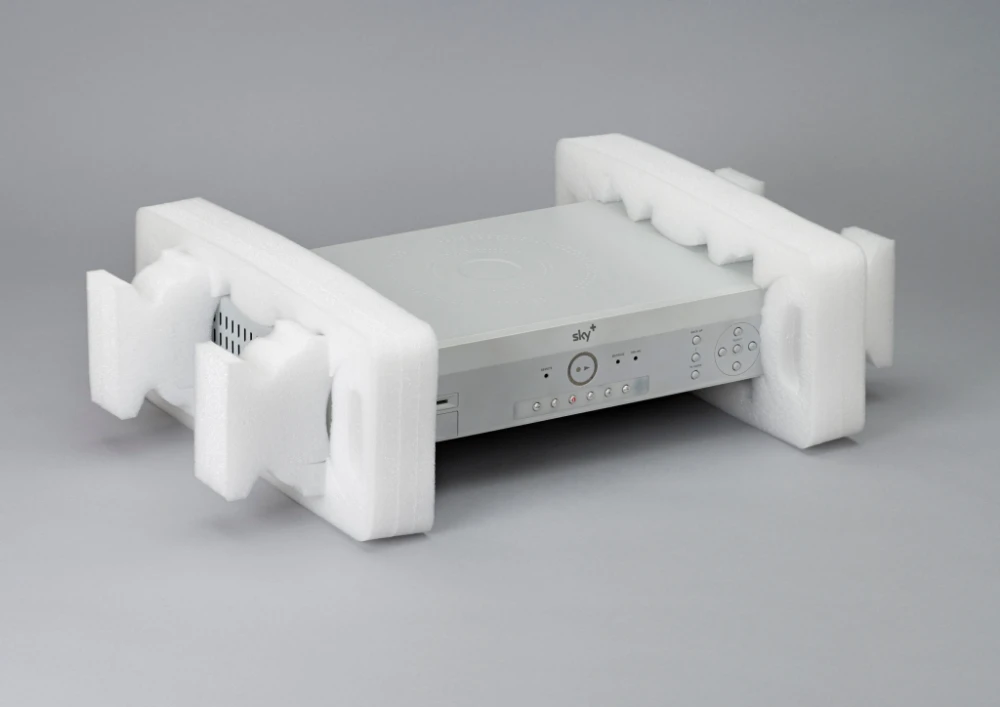
This may involve designing a specific outer carton combined with an internal foam or cushioning component. Instead of treating the box and protective insert as separate products, they can be considered as one complete packaging system.
That approach can be particularly valuable for businesses handling products that cannot be adequately protected with standard packaging.
Why Manchester Businesses May Need Custom Solutions
Manchester has a broad commercial landscape, from manufacturing and engineering businesses to retailers, distributors, technology companies, and specialist suppliers. Their products can vary dramatically in size, weight, shape, and fragility.
A single packaging format is therefore unlikely to be suitable for every business.
A company shipping delicate equipment may need carefully shaped internal protection, while another business may simply require reliable cushioning around smaller products. Some companies may also need packaging that provides a more professional presentation when the parcel reaches the end customer.
Custom packaging allows these different requirements to be considered from the beginning rather than attempting to adapt a generic solution afterwards.
Protecting Products During Transportation
One of the most important jobs of packaging is controlling what happens to a product while it is being transported.
Parcels can experience movement, vibration, pressure from surrounding packages, and occasional impacts. Even when the outer carton remains intact, the product inside can suffer damage if it is not properly secured.
Internal fitments can help keep products in position and create cushioning around sensitive areas. Foam sheets, polyurethane components, polyethylene materials, and other protective products can be selected according to the application.
For particularly delicate products, custom-shaped foam can provide support in areas where standard packaging materials may leave unwanted gaps.
The result is a package designed around the product rather than a product simply placed inside an available box.
Combining Outer Cartons With Internal Protection
A common mistake is to focus only on the outside of a package.
A strong carton is useful, but it cannot compensate for poor internal protection. If the product can move freely inside the box, impacts may still reach it.
A complete packaging design considers both elements. The external carton provides the primary enclosure, while the internal fitment helps position and cushion the product.
Having both elements designed as part of the same solution can also simplify procurement. Businesses may spend less time sourcing different components and managing multiple packaging specifications.
This can be particularly beneficial for companies that regularly ship large quantities of the same product.
Materials That Can Support Custom Packaging
Different products call for different protective materials. There is no universal option that provides the best solution for every application.
Polyethylene Foam
Polyethylene sheets can provide cushioning and separation between products and the packaging itself. Different thicknesses allow businesses to select material according to the level of protection required.
Some polyethylene options are also available with recycled content, making them worth considering when environmental factors are part of the packaging strategy.
Polyurethane Foam
Polyurethane can be used in applications where flexible cushioning and product support are required. Its characteristics make it suitable for creating protective components that can accommodate specific product shapes.
Custom foam designs can be particularly useful when a product has delicate surfaces or irregular contours.
Bubble Wrap
Bubble wrap remains a practical choice for general cushioning. It can be wrapped around individual products or used to add another protective layer within a carton.
Because it is lightweight and flexible, it can work alongside more structured packaging components.
Expanded Polystyrene
Expanded polystyrene can be formed into blocks and other shapes to create additional cushioning. Packing cubes can also be used to fill spaces and help prevent unwanted movement.
The material selected should always reflect the product’s actual protection requirements rather than being chosen simply because it is familiar.
Custom Packaging Can Improve Efficiency
Packaging affects more than product safety. It can also influence how quickly employees can prepare orders.
When workers have to improvise packaging for every product, packing can become inconsistent and time-consuming. Different box sizes, protective materials, and filling methods may be required for the same type of shipment.
A purpose-designed system can create a repeatable process.
For example, a business could use a specific carton with a matching internal fitment. Employees know which components belong together, and the product can be positioned consistently.
Over hundreds or thousands of shipments, small improvements in the packing process can have a meaningful operational impact.
Reducing Unnecessary Packaging
More packaging does not automatically mean better protection.
An oversized carton filled with excessive cushioning can increase material usage, storage requirements, and transportation volume. A more accurately designed package can potentially provide sufficient protection while avoiding unnecessary space.
This is one of the areas where bespoke design can be valuable. The dimensions of the packaging can be considered alongside the dimensions of the product.
Reducing empty space may also help businesses create more efficient packing arrangements during storage and transportation.
Sustainability and Packaging Design
Environmental responsibility is becoming increasingly relevant to packaging decisions.
Businesses are looking at recycled materials, recyclable options, and ways to reduce unnecessary packaging. Custom design can support these objectives by helping companies determine exactly what protection is required.
For example, if a product only needs a relatively thin protective layer, using a large quantity of loose packaging material may not be necessary.
Some protective materials can incorporate recycled content, while other packaging choices can focus on reducing excess material or improving the efficiency of the overall design.
The objective should be to find a practical balance between product protection and environmental considerations.
Packaging Can Strengthen Brand Perception
A parcel is also an opportunity for a company to communicate its standards.
Customers may not see a business’s warehouse, production area, or fulfilment process, but they do see the package that arrives at their door.
Well-organised, secure packaging can create the impression that a company pays attention to detail. Custom packaging can go even further by incorporating specific design elements, printing techniques, finishes, or presentation features.
For businesses competing in crowded markets, these details can contribute to a more memorable customer experience.
Benefits of Bespoke Packaging Manchester Solutions
Choosing a custom approach can provide several advantages:
- Better product protection: Packaging can be designed around vulnerable areas and specific product characteristics.
- Improved packing consistency: Employees can follow a defined packing process.
- Potential material savings: Accurate sizing can reduce unnecessary empty space and excess protective material.
- Professional presentation: Custom designs can help create a stronger brand experience.
- Simplified sourcing: Outer cartons and internal components can be developed as one complete solution.
- Greater flexibility: Packaging can be adapted for unusual shapes, sizes, and specialist products.
- Sustainability opportunities: Recycled and environmentally conscious materials can be considered during the design process.
How to Approach a Custom Packaging Project
The process should begin with the product rather than the packaging material.
Businesses should consider the product’s dimensions, weight, fragility, surface finish, and potential points of impact. The transportation journey should also be assessed, including storage, handling, stacking, and delivery conditions.
Next, the business can determine whether standard materials are sufficient or whether a custom internal fitment is required.
It is also useful to consider the people who will pack the product. A design that protects the item but takes too long to assemble may not be practical for high-volume operations.
Finally, businesses should evaluate cost, material usage, presentation, and sustainability together. A successful packaging solution should work effectively in the real world rather than simply looking good on paper.
Conclusion
Packaging does not have to be a one-size-fits-all solution. For businesses with specialist products, unusual dimensions, delicate components, or demanding distribution requirements, custom design can provide a more practical alternative to generic packaging.
Bespoke packaging Manchester services can help businesses approach protection, efficiency, presentation, and sustainability as connected parts of the same process. From custom foam fitments and polyethylene sheets to cartons, cushioning, tape, and wrapping materials, different components can be combined to create a packaging system suited to the product.
Ultimately, effective Bespoke packaging is about solving a specific problem. When packaging is designed around the product, the business, and the customer experience, it becomes much more than a container—it becomes an important part of a reliable and professional delivery process.