What Safety Features Should a Solar Generator Include?
Solar generator safety involves more than the battery inside the unit. A well-designed system should manage stored energy predictably, deliver suitable power to connected equipment, support clear monitoring, and fit safely into its intended environment. These considerations become especially important when a power station supports refrigerators, office electronics, medical equipment, or other household essentials. Rather than judging safety from one specification, buyers should examine how battery technology, electrical performance, physical design, and operating controls work together during everyday and backup use.
Start With the Parts That Manage Power and Battery Operation
Battery Chemistry Deserves Close Attention
The battery sits at the center of a portable solar power generator, so its chemistry and intended service life deserve careful review. Buyers should look for clearly identified battery cells and cycle-life specifications rather than treating all stored energy as equivalent. The Anker SOLIX S2000 uses next-generation 314Ah LFP cells and provides 2,010Wh of capacity. Its specifications state 6,000 cycles to 80% capacity and 10,000 cycles to 60% capacity, with a stated 15-year lifespan. Those figures make the battery’s long-term performance easier to understand. Battery information should therefore form part of a broader safety assessment that considers how frequently the system will operate, where it will be positioned, and which devices it will support over its service life.
Output Ratings Should Match Real Equipment
Safe power planning starts with knowing what the generator is designed to supply. Rated output represents the level intended for regular operation, while peak output provides additional context for equipment with higher short-duration power demands. Users should compare these figures with the requirements of the appliances they intend to connect. The S2000 provides 1,500W rated AC output and 3,000W peak output through pure sine wave AC. Anker states that it can power 99% of essentials, with examples including a 300W sump pump and household equipment such as microwaves, kettles, coffee makers, and medium ovens within the listed power ranges. Clear output information allows households to create a planned load list rather than treating every appliance as interchangeable.
UPS Switching Matters for Continuous Equipment
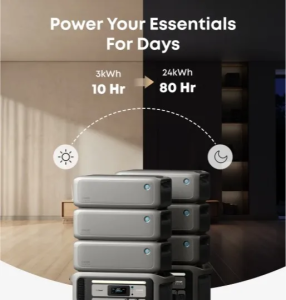
Some equipment needs continuity as well as stored energy. A home office may depend on a router and computer equipment, while other household situations may involve devices that users prefer to keep powered through an interruption. UPS functionality addresses this requirement by switching to battery power when the normal supply changes. The Anker SOLIX S2000 specifies a 10 ms UPS switchover and positions this capability for home-office backup. Its stated runtime examples also include up to 81 hours for a 10W Wi-Fi router. When evaluating a solar generator with UPS functionality, buyers should check the stated switchover specification and consider which equipment they plan to connect. This makes continuity part of the power plan rather than an afterthought during an outage.
Look at How the Generator Fits Into Everyday Environments
Indoor Operation Calls for Thoughtful Physical Design
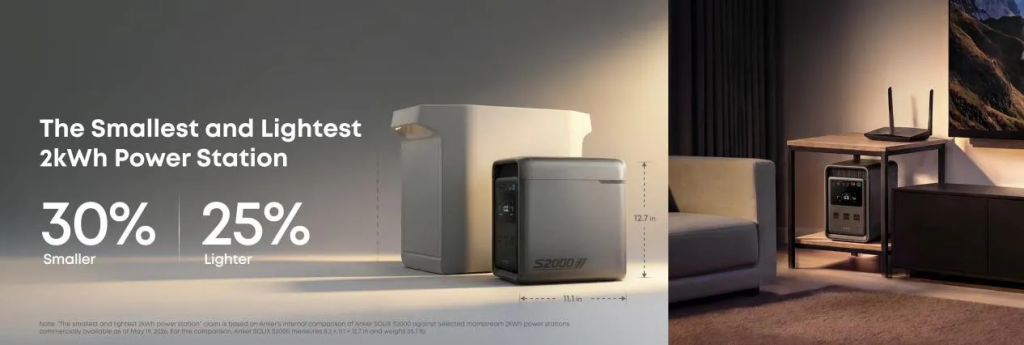
A solar generator used around the home should fit naturally into occupied spaces. Placement, noise, cable routing, and access to outlets all influence how comfortably people can operate it. The S2000 measures 8.2 × 11.1 × 12.7 inches and weighs 35.7 pounds, with built-in handles for carrying. Front and rear outlets allow connections from different sides, which can simplify cable organization depending on where the unit sits. Anker also presents the S2000 for safe indoor use and specifies 30 dB quiet operation while powering home essentials under 600W. These characteristics are relevant when a unit may move between a kitchen, bedroom, office, or other living space instead of remaining in one dedicated location.
Monitoring Makes Power Conditions Easier to Understand
Users make better operating decisions when they can see what the power station is doing. Clear information about charge level, remaining runtime, input, and output provides useful context before connecting equipment or planning backup time. The S2000 includes a display and app-based smart power management. Its app supports remote monitoring and one-tap control, allowing users to check input and output information from a smartphone. Storm Guard auto-charging adds another preparedness function by supporting charging ahead of severe weather, while monthly auto-cycling is designed to support battery life. Regular firmware updates also form part of the system’s ongoing management. Together, these functions make the generator’s operating status more visible and allow households to manage stored power more deliberately.
Safe Planning Should Include the Recharge Process
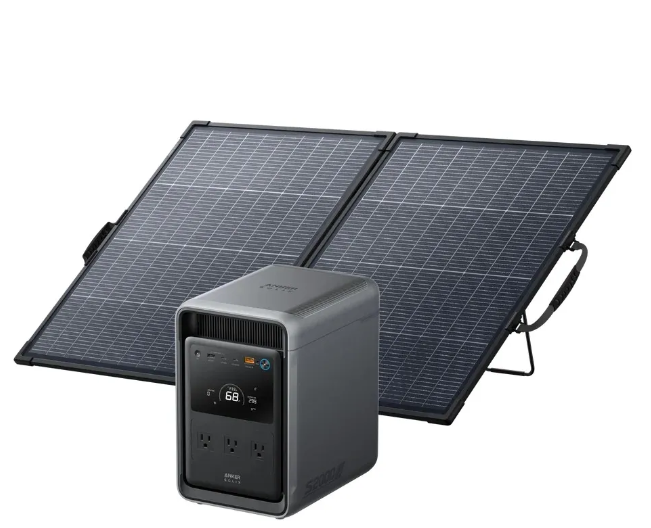
Safety considerations continue when the battery is being replenished. A useful system should clearly define its supported charging methods and input ratings so users can select the appropriate method for each setting. The S2000 supports six ways to recharge. Its documented options include up to 1,600W AC input, 400W solar input, a 120W car outlet, and 400W alternator charger input. For solar charging, Anker offers the S2000 with either a 200W or 400W bifacial solar panel. The product information states that 400W solar input can recharge the battery to 80% in 4.5 hours under the specified conditions. Understanding these charging routes allows users to plan energy replenishment around home, vehicle, and outdoor scenarios while following the system’s stated input capabilities.
Conclusion
Solar generator safety comes from a combination of battery design, clearly defined output, dependable power continuity, practical physical design, monitoring, and appropriate charging methods. These elements matter because portable power may operate close to people and important household equipment for extended periods. The Anker SOLIX S2000 brings several relevant features together, including LFP cells, defined output ratings, 10 ms UPS switching, smart monitoring, and multiple recharge options. Evaluating these areas together provides a more useful safety picture than relying on any single specification.